Anxiety & Resilience
Climbing Through Fear: What Rock Climbing Can Teach Us About Anxiety
Reflections on fear, self-trust, emotional regulation, and recognizing your personal limits.
The Grounded Summit Therapy · Colorado
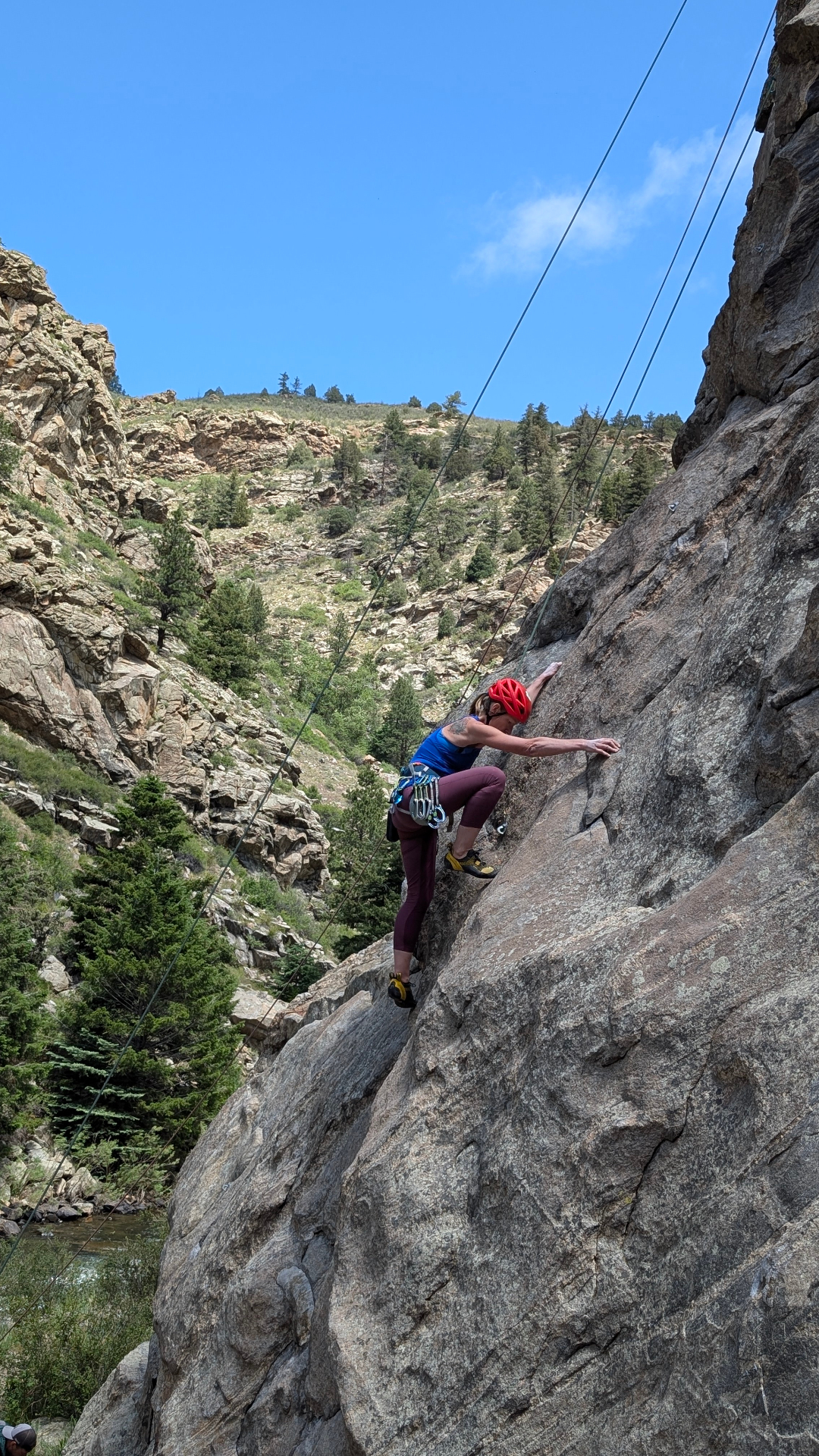
Fear can be information
On a climbing wall, fear can feel very immediate. Your heart speeds up. Your grip tightens. Your attention narrows. Anxiety in everyday life can feel similar—even when the challenge is a difficult conversation rather than a rock face.
Fear isn't always something to defeat. Sometimes it points to a genuine risk or a need for more support. Sometimes it shows up around uncertainty. Learning to notice the difference can help you respond with more choice.
One next step
Climbing invites attention to the next hold rather than the entire route. In daily life, that might mean choosing one manageable action instead of solving your whole future. Pause. Notice what is happening. Ask what support you have and what step feels reasonable.
Self-trust can include trying something new, asking for help, or deciding not to continue. Recognizing your limits is not the opposite of courage. You don't have to push through panic to prove anything.
You don't need to climb to practice
This is a reflection, not climbing instruction. Climbing requires appropriate training, equipment, and qualified supervision. You can explore the same themes through ordinary experiences: setting a boundary, making a phone call, or taking a small step toward a goal.
In therapy, we can work with anxiety at a pace that respects your nervous system and real-life circumstances. Progress may look less like reaching the summit and more like learning when to move, pause, or ask someone to stand beside you.
For general education only; not a diagnosis, treatment plan, or substitute for individual care. If you are in crisis, call or text 988. For immediate danger, call 911.
All articles